Choosing a hotel
What do hotel stars really mean? Four vs five stars explained
Why a five-star hotel isn't always the better choice, and what hotel classifications actually tell you.
When I'm choosing a hotel for myself, I tend to look at five-star properties first. I enjoy staying in a really good hotel, particularly for a special occasion, and I'm happy to pay more when the experience justifies it.
But I've also come across five-star hotels that look tired, haven't had a meaningful renovation in years, or simply have a style that doesn't appeal to me. They might be luxurious, with impressive facilities and excellent service, but that doesn't necessarily make me want to stay there.
Meanwhile, some of the most appealing hotels I've come across are smaller four-star boutique properties with lovely rooms, interesting buildings and a great location.
Hotel stars are useful, but there's quite a lot they don't tell you. And to complicate matters, they don't mean exactly the same thing everywhere.
What do hotel stars actually measure?
Most formal hotel classifications assess a combination of facilities, comfort, services and quality standards.
Depending on the country, the requirements might cover room sizes, reception hours, staffing, restaurants, accessibility and numerous other details. Generally, the higher the classification, the more demanding the requirements.
But there's a difference between meeting those standards and being somewhere you'll actually enjoy staying.
A five-star property might offer several restaurants, a spa and extensive guest services, yet have bedrooms that feel dated. A smaller four-star hotel might have beautifully renovated rooms and excellent hospitality but lack certain facilities required for a fifth star.
Classification systems can assess maintenance and service quality too. They're not simply lists of amenities. But they can't tell you whether you'll like the interiors, enjoy the atmosphere or feel comfortable in a particular room.
And sometimes those things matter more than an extensive list of facilities.
What do Superior, Palace and Gran Lujo mean?
There's no single worldwide authority responsible for hotel stars. Some countries have national systems, others regulate classifications regionally, and some rely on voluntary professional assessments.
Here are some of the distinctions worth understanding.
On smaller screens, scroll the table sideways to read each country’s classification.
| Country | What to know |
|---|---|
| France | Hotels are officially classified from one to five stars. Exceptional five-star properties may also receive the separate Palace distinction, following an additional assessment. |
| Germany, Austria and Switzerland | These countries participate in the Hotelstars Union. A four-star Superior hotel has achieved enough points for the next category but doesn't meet all its mandatory requirements. |
| Italy | Classification is regulated regionally. In Sardinia, for example, hotels can qualify for four-star Superior or five-star Lusso. |
| Spain | Regional systems apply. Catalonia recognises four-star Superior and Gran Luxe, while Andalusia has a Gran Lujo designation for qualifying five-star hotels. |
| United Kingdom | Assessment arrangements vary. In England, voluntary schemes such as VisitEngland and the AA use professional inspections. Not every hotel participates. |
| United States | There's no equivalent single nationwide official classification. Booking platforms and independent organisations use different systems, including Forbes Stars and AAA Diamonds. |
Two points are particularly interesting.
First, Superior isn't just a flattering adjective when it's part of a recognised classification. In the Hotelstars Union system, it has a specific meaning. A four-star Superior property might have achieved the points required for five stars but be missing a particular mandatory facility or service.
Second, Palace, Lusso and Gran Lujo aren't interchangeable. They're awarded under different rules, so you shouldn't assume they all represent exactly the same standard.
It's also worth remembering that not every hotel participates in a formal classification scheme. Where assessment is voluntary, an unclassified property isn't necessarily an inferior one.
Why I wouldn't overlook a good four-star boutique hotel
One example that comes to mind is Palacio Solecio in Málaga, where I spent three nights with Peter and friends.
It's a four-star boutique hotel in the historic centre, housed in a restored 18th-century Andalusian palace.
I remember it as an excellent stay. The rooms were bright and well kept, while the glass-roofed courtyard and historic interiors gave the hotel a lovely atmosphere.
It's the sort of place whose appeal isn't particularly well expressed by its star rating.
There's also an interesting detail worth knowing before booking: Palacio Solecio has two buildings. The original palace retains its historic character, while the newer Solecio building, opened in 2023, has a more contemporary feel.
Neither is necessarily better, but I'd certainly want to know which building my room was in.
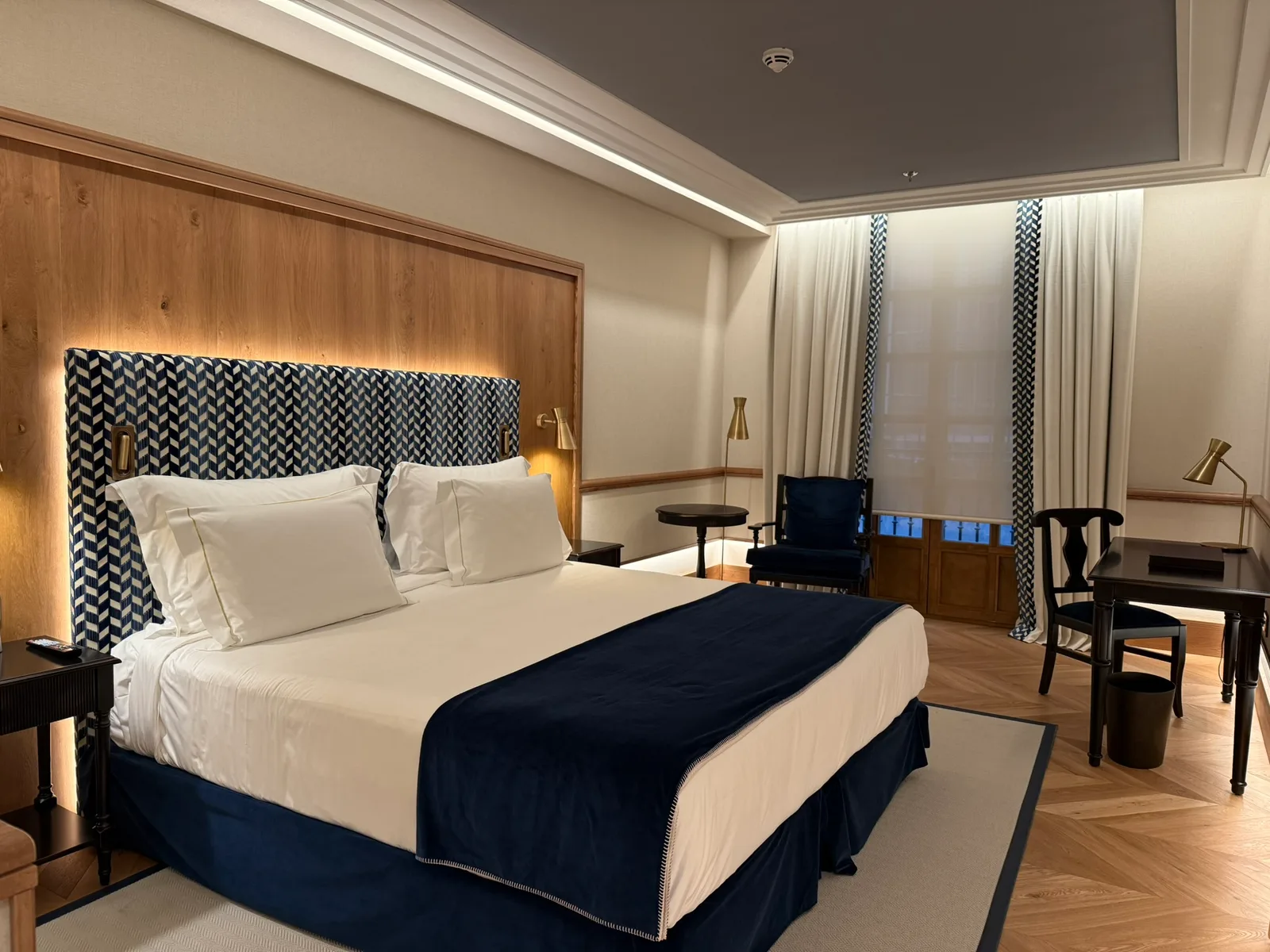
Hotel size matters to me too.
A conventional four-star international chain hotel and a small independent boutique hotel might have identical classifications yet offer completely different experiences.
One might have hundreds of rooms, extensive facilities and familiar, consistent standards. The other might feel more intimate, with individual design and a stronger sense of place.
Neither approach is inherently better. But for a weekend exploring a city, I might be much happier in a smaller hotel with character than in a large property with facilities I'll barely use.
And location can easily outweigh an extra star.
I spend a lot of time reading reviews
Reviews are an important part of how I choose hotels, both for myself and when researching options for clients.
I rarely stop at the overall score. I want to understand what people actually experienced.
Recent reviews matter most, because hotels change. A property might have been renovated since its less favourable reviews, or an established five-star hotel might now be showing its age.
I also look for patterns. One complaint about a noisy room could be an isolated experience. Several recent guests mentioning poor soundproofing are more difficult to ignore.
And I try to judge how credible the feedback is. Fake and misleading reviews exist, and not every genuine review is particularly informative. I find detailed observations and recent guest photographs helpful, although there's no foolproof way to identify every fake review.
I also consider who's writing the review. Someone travelling for business might prioritise completely different things from a couple celebrating an anniversary.
The value of feedback from people I know
One of the things I appreciate about being a travel advisor is being able to draw on more than publicly available reviews.
Feedback from my own clients helps me understand not just whether they liked a hotel, but what worked for them and what didn't.
Through the Fora advisor network, I can also exchange information with fellow advisors, including those who've personally stayed at or inspected properties.
They might have useful observations about different room categories, recent renovations, service or details that aren't immediately obvious online.
Of course, there's a difference between someone having stayed at a hotel and simply having researched or booked it for a client. I take that into account.
But being able to compare notes, and sometimes ask specific follow-up questions, gives me another perspective when assessing a hotel.
What I'd check before booking
When comparing two hotels, particularly a four-star and a five-star, these are the things I pay most attention to:
- The actual room. How large is it? Has it been renovated? What does it overlook? Is it in the main building or an extension? The hotel's classification doesn't mean every room offers the same experience.
- The location. Is it convenient for what you'll actually be doing? Would you enjoy the neighbourhood?
- The character and size. Do you want an intimate boutique hotel or a full-service property with multiple restaurants, a spa and plenty of facilities?
- Recent guest experiences. What patterns emerge from the reviews? Is there anything worth investigating?
- What you're paying for. How do the room category, breakfast, included services and cancellation terms compare?
Sometimes I'd rather spend more for a genuinely memorable five-star stay, especially for an anniversary or another special occasion.
Other times, I'd prefer a better room in an excellent four-star hotel.
It depends on what will make the biggest difference to the trip.
One final distinction: Google's stars aren't always official stars
You might see a hotel described as four-star on Google, alongside a guest rating of 4.8 out of 5.
These measure different things.
The first represents the hotel's class, while the second reflects guest reviews.
Google can also determine hotel class ratings using several sources, including its own assessment of property characteristics. So a five-star classification displayed on Google isn't necessarily an official rating awarded by a tourism authority.
It's worth understanding what each number represents.
So, are five-star hotels worth it?
For me, often yes. I appreciate the comfort, facilities and service a really good five-star hotel can provide, particularly when the hotel itself is part of what makes a trip special.
But I'd happily choose a beautifully maintained four-star boutique hotel, in a location I love, over a dated five-star property that doesn't particularly appeal to me.
The stars help narrow down the options. They don't make the decision for me.
Choosing where to stay?
Tell me where you’re heading, your budget and what matters to you. I’ll help narrow down the hotel options.